Moving to France from the UK
Since Brexit, moving to France from the UK is a two-track job: there is the visa and residency side, which
is yours to apply for, and the customs side, which travels with your belongings and is ours to prepare.
They run on different clocks, and the usual reason a move gets messy is that one was started months before
anybody thought about the other. Below is the order things actually need to happen in, based on the moves
we run on this route every couple of weeks.
The order it needs to happen in
-
6 to 9 months out
1. Decide what kind of resident you are
Staying under 90 days in any 180 is visa free and is a second-home arrangement, not a move. Anything
longer means a long-stay visa, and which one you apply for shapes the paperwork for everything after it,
including whether your belongings qualify for customs relief.
-
3 months out
2. Apply for the long-stay visa
Applications to the French consulate open 90 days before travel and cannot be made earlier, so this
is usually the fixed point everything else is planned around. Book the appointment as soon as the window
opens rather than waiting for the property to complete.
-
6 to 8 weeks out
3. Get the move surveyed and quoted
Moves to France are surveyed by video
rather than in person: you walk through the house on your phone and send it on WhatsApp. You get a
written quotation, and that is the price you pay on the day.
-
3 to 4 weeks out
4. Book the date and decide on packing
Three to four weeks is the lead time that keeps your choice of dates open. This is also where you
choose the level of service: a full pack, a part pack covering fragile items only, or you pack and we
load. Packing and export wrapping are optional and quoted separately.
-
Loading week
5. The inventory and the customs file
A written inventory is produced on every job, whoever packed the boxes, because it is the basis of
the customs entry. The file is prepared with you and lodged by the customs agent we use on every French
job, which is what transfer-of-residence relief is claimed against.
-
First 3 months in France
6. Validate the visa at the French end
Most long-stay visas have to be validated online with the French authorities within three months of
arrival, with the applicable tax paid at the same time. That validation is what later leads to a carte
de séjour if you stay on.
Which long-stay visa applies
UK citizens now need a long-stay visa (visa de long séjour) to stay in France for more than 90 days
in any 180. The main types are:
- Retiree, for those with proof of pension or passive income and private health cover. Valid a year and renewable, and the most common one on our France work.
- Work, which needs a confirmed job offer or contract. Covers employees, intra-company transfers, highly skilled workers and some self-employed roles.
- Family, for spouses, children or dependants of French citizens or legal residents.
- Student (VLS-TS Étudiant), for higher education or training, four months to a year, with part-time work allowed up to 964 hours a year.
Worth knowing separately: the UK and France have a double taxation agreement, so income is not taxed twice
in both countries. That is worth working through before you move rather than after, because it can change
which visa route makes sense.
What happens to your belongings at the border
Since Brexit a household move to France is a customs movement. Your goods travel against a customs entry
supported by a valued inventory, and used household effects are normally exempt from duty and VAT under
transfer-of-residence relief where you are genuinely moving your main home and the goods have been owned
and used for at least six months. Furnishing a holiday property is a different case, and we will tell you
which one you are in at quotation stage rather than at the border. One firm limit worth knowing early:
we do not move cars or other motor vehicles, which need a specialist shipper.
How long the move itself takes, and what it costs
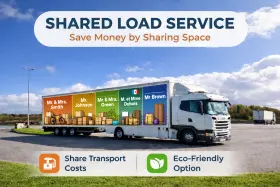
Door to door on a dedicated vehicle is 3 to 7 working days depending on the region, and 5 to 14 days on a
shared load,
which travels on our scheduled France run. Prices start at £1,200 and the full bands are in the
price guide above. If the French completion slips, which it often does, two
months of free UK storage is included on every
European removal, so the move does not have to wait for the keys.
Where people are actually moving to
Not sure where to settle? From the Dordogne and Brittany to Provence and the Côte d'Azur, our guide to the
best places to live in France for English speakers
covers the most popular regions for British expats, and we have pages of our own for
the Dordogne and the Charente,
Paris,
Bordeaux,
Lyon,
Nice and
Toulouse.
For the detail on the residency side, see our guides on
retiring to France and
how long you can live in France without becoming a resident.
Heading for the Riviera? You may also be weighing up
neighbouring Monaco.