
REMOVALS TO GERMANY FROM THE UK



Removals to Germany from the UK — UK to Germany House Movers

A move to Germany is rarely a retirement-in-the-sun story. It's a job in Frankfurt, a research post in Munich, a transfer to the Stuttgart engineering belt, a start-up role in Berlin — or a family heading home after years abroad. That changes what matters on the move: tight delivery windows around a start date, city-centre access, and a German rental system with rules that surprise nearly every British mover (the missing kitchen being the famous one).
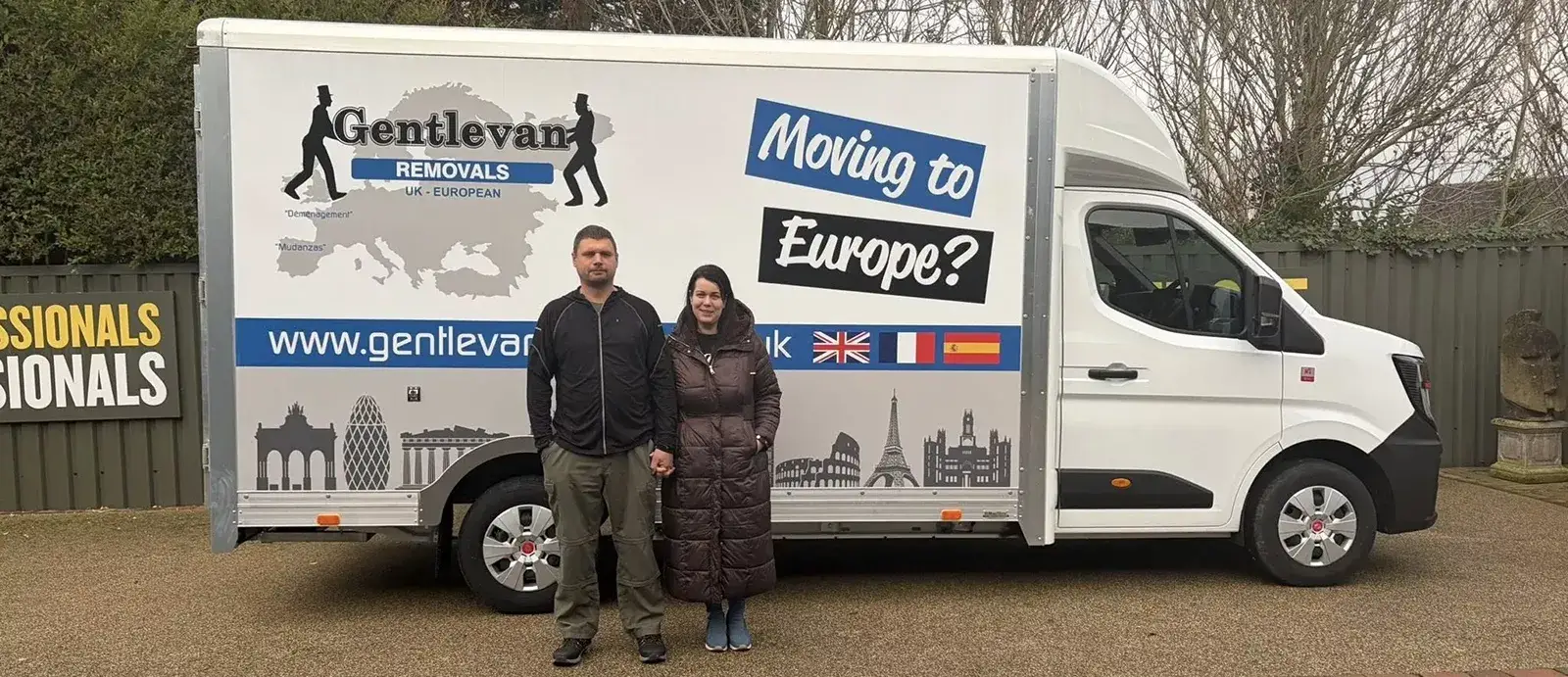
Gentlevan Removals is a family-run firm that has been moving households since 2011, and Germany is a regular fixture on our European schedule. We collect from anywhere in the UK, run the load across on the autobahn corridor through Belgium and the Netherlands, and — the part that actually distinguishes us — switch to a smaller van for the final approach so a narrow Altstadt street or a low-emission zone isn't a dead end. Part-load from £1,200, dedicated vans for whole houses, and 2 months free UK storage on every move. Move Assured and AIM accredited, with 202 five-star reviews.
What a Germany Move Actually Costs — and Why
Nobody can quote a Germany move off a postcode alone, but three things explain almost the whole spread, and once you can see them you can sanity-check any quote you're given.
How far east you're going. Germany is wide. Cologne and Düsseldorf are barely past the Dutch border; Frankfurt is the comfortable middle; Berlin, Munich, Stuttgart and especially Dresden and Leipzig add hundreds of motorway miles and another day on the road. West-to-east is the single biggest swing in a German quote.
How much is coming. The honest measure isn't bedrooms, it's cubic feet — and Germany has a habit of inflating it, because people bring their whole kitchen and wardrobes rather than leaving fittings behind. A "two-bed" German move is often bigger than a British one.
What the far end looks like. Same city, same volume, wildly different day: a ground-floor flat with a driveway versus a fourth-floor Altbau with a spiral stair and no lift. The second needs a furniture lift and a small van, and that's where a chunk of the cost lives.
| Move Size | Typical Service | Guide Price (GBP) |
|---|---|---|
| A room or two / studio | Part-load | £1,200 – £2,800 |
| 1–2 bed flat | Part-load or shared-load | £2,600 – £4,600 |
| 3-bed home | Shared-load or dedicated | £4,400 – £7,000 |
| 4+ bed / large house | Dedicated vehicle | £6,500 – £8,500+ |
Guide figures for 2026, covering UK collection, transport, German customs paperwork, Transfer of Residence relief and door delivery. A furniture lift, packing, extra protection for a dismantled kitchen and MoveProtect increased-liability cover are added where needed and priced at the survey. Standard cover is our restricted liability of £40 per item; MoveProtect raises that for higher-value goods. Get a real figure here — most come back the same working day.
Reaching the Actual Door — How the Transhipment Van Works
Most international movers are built for one thing: a big lorry, a long motorway, a big delivery. That works until the German address is up a one-way medieval lane, inside a low-emission Umweltzone, or on a tram-lined street with nowhere to stop a 40-tonner. Then the big lorry becomes the problem.
We run it differently, and it's worth understanding because it changes both the price and what we can promise. The long haul across Europe is done by a large vehicle — that's the efficient way to cover the miles. But for the last stretch into a tight German city centre, we transfer your load into a smaller transhipment van that's allowed where the big one isn't and can actually get to the kerb outside your building.
In Germany specifically, that buys you three things a single-lorry mover can't easily offer:
- Umweltzone access — most German cities ban older, larger vehicles from their centres without the right emissions sticker; a compliant small van gets in
- Old-town and tram streets — the narrow lanes of a Cologne, Regensburg or Heidelberg Altstadt that a full lorry simply cannot enter
- No-loading-bay buildings — older apartment blocks with no service access, where a small van can pull up close and a big one can't
The point isn't the vehicle for its own sake — it's that you get the economics of a big lorry on the motorway and the access of a small van at the door, instead of paying for a little van to crawl 700 miles across the continent. When you tell us the German street at the survey, we decide there and then whether the final leg needs the small van, a furniture lift, or both.

The German Kitchen — and Other Things Brits Don't See Coming
If there's one thing that genuinely catches British movers off guard, it's this: German rental flats often come with no kitchen at all. Not "no fridge" — no kitchen. Bare walls, a couple of pipe stubs and an electrical connection where the cooker should be. A flat that does include one is advertised as an Einbauküche (EBK), and you pay more rent for the privilege.
The knock-on for a removal is real. Because tenants buy their own kitchens, they take them when they leave — units, worktops, sink, oven, hob, the lot — or sell them to the incoming tenant in a side deal called an Ablöse. The old joke about taking "everything but the kitchen sink" is, in Germany, slightly wrong: they take that too, and frequently the light fittings as well, leaving bare wires in the ceiling.
So a German move often includes a whole kitchen as freight. To be clear about what we do and don't do: we're not kitchen fitters, so the dismantling and the refitting at the far end are for you or a kitchen specialist to arrange. What we do is transport it safely — once it's taken down, we wrap and protect the units, worktops and appliances and carry them with the rest of your move. The main thing is to tell us at the survey, so the kitchen is counted in the volume and we plan the space and materials for it rather than meeting an unexpected flat-pack kitchen on move morning.
A few other German habits worth knowing before move day:
- Halteverbotszone — for most central addresses you arrange a temporary no-parking zone so the van has space outside. It needs a couple of weeks' notice; we organise it once we have the address.
- Möbelaufzug — the external furniture lift that hoists wardrobes and sofas through an upper window when the Altbau stairwell won't take them. Standard kit in Germany; we book and time it.
- Sperrmüll — the council bulky-waste collection. Handy for decluttering before you ship, and worth booking early because slots get busy at month-end.
- Leaving the old place — German tenancies often expect the flat handed back freshly decorated, which affects your timing. Build it into the plan so it doesn't collide with move day.
None of this is meant to be daunting — it's the opposite. Knowing it in advance is exactly what turns a German move from stressful to routine, and it's the sort of thing we talk through at the survey so there are no surprises on the day.
House Removals to Germany, City by City
Where you're heading shapes the move more in Germany than almost anywhere we go — the cities are genuinely different to deliver into. Here's what each tends to mean in practice:
- Berlin — sprawling and largely low-rise, with endless Altbau blocks built around rear courtyards (Hinterhöfe) and very few lifts. Brace for the famously scarce Anmeldung appointment, too — book it the moment you have an address.
- Munich — Germany's priciest and most tightly regulated city. Strict zone rules inside the Mittlerer Ring and limited parking make the small-van approach almost essential for central deliveries.
- Frankfurt — the one German skyline. More high-rise apartments than elsewhere, which means lifts and loading bays, but also booking slots and concierge rules. The Westend's older flats are a different, tighter story.
- Hamburg — handsome Altbau in Eimsbüttel and Eppendorf, sleek new-builds in HafenCity. Water everywhere, so access routes matter; we check bridges and one-ways before the day.
- Stuttgart — built in a basin and genuinely hilly, threaded with the city's famous Stäffele staircases. Some addresses can't be reached by a large vehicle at all, which is exactly the case the transhipment van exists for.
- Cologne & Düsseldorf — Rhineland cities with tight old centres. Watch the calendar: Karneval closes streets in late winter and the big Messe trade fairs swallow the city for days, both worth planning around.
- Leipzig & Dresden — increasingly popular, more affordable, and the furthest east we regularly run, so the longest haul and best suited to a planned shared-load.
Your city not here? We deliver everywhere from Nuremberg to Bremen to Hannover — just tell us the destination. If you're still deciding where to land, our guide to the best cities to live in Germany compares them for cost, jobs and lifestyle.
Customs, Transfer of Residence & the 14-Day Anmeldung
Since Brexit, every UK to Germany removal goes through customs, but it's routine for us and your household goods enter duty-free under Transfer of Residence relief when you're moving your main home and meet the usual conditions — broadly, that you've lived outside the EU for at least a year, have owned and used the goods for six months, and import within twelve months of the move. We assemble and lodge the file: a signed inventory, passport copy, proof of your new German address and the declaration itself.
Then there's the one piece of German admin that isn't ours to do but trips up nearly everyone — the Anmeldung. Within roughly 14 days of moving in you must register your address at the local Bürgeramt, and the certificate you receive (the Meldebescheinigung) is the master key for everything that follows: bank account, tax ID, mobile contract, broadband. In the bigger cities appointments are gold dust, so book one before you arrive if you possibly can. We flag it on every German move because it's the step that quietly delays people for weeks.
Germany to UK Removals — Coming Home

Plenty of our German work runs the other way. Contracts end, postings finish, families decide to be home for the start of the school year — and former British Forces Germany households still come back regularly. Because our vehicles return from Germany in any case, a Germany to UK removal can often piggy-back a return journey, which keeps the price down.
The paperwork flips direction: an export declaration on the German side, and on the UK side a ToR1 (Transfer of Residence relief), which HMRC must approve before your goods arrive — so it pays to start it four to six weeks out. We handle both ends, collect from anywhere in Germany, and deliver to any UK address.
Germany also sits on the same road as our Belgium, Netherlands and Switzerland routes, so if your move touches more than one country we can usually fold it into a single trip. It's all part of our wider European removals service.
Removals to Germany — Your Questions Answered
As a rough guide, a room or two starts from around £1,200 on a part-load, a one or two-bed flat runs £2,600–£4,600, and a three-bed home £4,400–£7,000, with larger houses above that. The figure is driven by how far east you're going, how much is coming (German moves are often bulkier because the kitchen comes too), and the access at the far end. We always survey before quoting, so the price you're given is the price you pay.
Yes. If you're not filling a vehicle, your goods share the run with other Germany-bound shipments and you pay for the space you use — ideal for a flat, a single room or a partial move. Part load removals to Germany start from around £1,200. They travel on a scheduled departure rather than a date you choose, so they suit moves with a little flexibility.
We do the long motorway haul in a large vehicle, then transfer your load into a smaller transhipment van for the final approach. That small van can enter low-emission Umweltzonen, navigate old-town streets and reach buildings with no loading bay — places a full lorry can't go. You get the economy of the big vehicle over distance and the access of a small one at your door.
We'll transport one, yes — and on German moves it's common, because many rentals come without a kitchen so tenants take their Einbauküche with them. To be straight about it: we're movers, not kitchen fitters, so the take-down and the refit are for you or a kitchen specialist to handle. Once it's dismantled we wrap and protect the units, worktops and appliances and carry them with your move. Just mention it at the survey so the kitchen is counted in the volume and we plan the space and materials for it.
Yes. German Altbau apartments pair big furniture with narrow stairwells and often no lift, so the standard solution is an external furniture lift (Möbelaufzug) that hoists items through a window. We book it with a local operator and time it to the vehicle's arrival. Tell us the floor and the stairwell at the survey and we plan and price it in.
Often — end-of-contract professionals, families returning for school, and former British Forces Germany households. The German side needs an export declaration; the UK side runs on ToR1 (Transfer of Residence relief), which must be approved before the goods land, so start it four to six weeks ahead. We prepare both, and because our vans return from Germany anyway, a return move is frequently cheaper than expected.
Customs is a declaration on every move; household goods clear duty-free under Transfer of Residence relief when you're moving your main home and meet the conditions, and we lodge the file for you. Separately — not part of the removal but easy to forget — you must register your address (the Anmeldung) at the local Bürgeramt within about 14 days of arriving. Book that appointment early, especially in the big cities.
Tell Us About Your Germany Move
Send us the cities, the rough size and your dates — we'll come back with a clear, surveyed price and the right plan for the German end.
Prefer to talk it through? +44 7861 930529
A real person reads every enquiry, and most quotes come back the same working day.