The 7 Best Cities to Live in Germany for Expats
Germany ranked seventh in a global index of the best countries to live in — and it is easy to see why. As the third-largest economy in the world, the country offers a robust job market, world-class infrastructure, prestigious universities, and a reliable healthcare system. Add a multicultural, welcoming population to the mix, and you have a destination that works well for both families and professionals relocating from the UK.
Whether you are moving for work, lifestyle, or a fresh start, this guide covers the seven best cities to live in Germany for expats. And when you are ready to make the move, Gentlevan Removals can take care of your removal to Germany — door to door, from anywhere in the UK.
Overview of the Best Cities to Live in Germany
Germany's per capita GDP sits well above the EU average, and its diverse job market spans finance, technology, manufacturing, media and the creative industries. It is also a genuinely multicultural country — English is widely spoken in most major cities, which eases the transition considerably for UK residents.
Here are the seven best cities to live in Germany, each with its own distinct character and advantages.
1. Berlin
The German capital is one of the most international cities in Europe. Berlin has one of the highest concentrations of foreign nationals in the country, and English is spoken widely — language barriers are rarely a concern. The city offers strong employment prospects, particularly in finance and tech, and its public universities allow students to pursue higher education with no tuition fees.
Berlin is also the cultural and nightlife hub of Germany — home to some of Europe's most celebrated clubs and venues, and host to global music festivals including Lollapalooza. The food scene reflects its diverse population, making it a genuinely cosmopolitan place to live. Rents in central areas can be high due to demand, but the city remains one of the most accessible entry points into German life for newcomers.
2. Munich
Munich is the third-largest city in Germany and consistently ranks as one of the best places to live in the country for foreigners. It is exceptionally well connected by public transport and urban infrastructure, yet offers easy access to the surrounding Bavarian countryside — lakes, mountains and rural landscapes are within easy reach of the city centre.
Architecturally, Munich blends historic landmarks like St. Peter's Church with modern cosmopolitan life. It is a major hub for AI startups and attracts entrepreneurs, engineers and financial professionals from across Europe. While it is one of Germany's more expensive cities, its beer culture, the world-famous Oktoberfest, and its quality of life make it a perennial favourite for expats seeking a balance between city living and nature.
3. Hamburg
Hamburg is one of Germany's most important port cities — covered in a lattice of canals and parklands, with an old-school maritime charm that sets it apart from other German cities. The historic Speicherstadt warehouse district is a UNESCO World Heritage Site and gives the city a unique architectural character.
Beyond its heritage, Hamburg is a significant industrial and publishing hub with strong employment prospects. The city has a long tradition of fostering creative industries — music, theatre, performing arts and sports are all prominent parts of Hamburg life. The Reeperbahn, famously, is where the Beatles refined their early live performances. Like Munich, Hamburg is on the pricier side, but the lifestyle, healthcare, and educational facilities justify the cost.
4. Cologne (Köln)
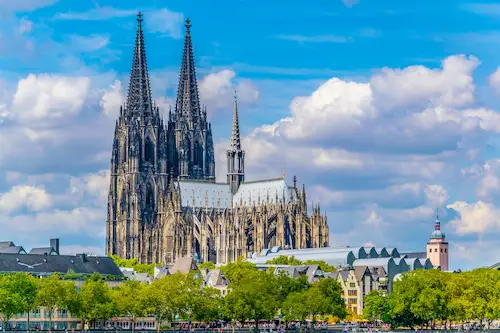
Cologne is one of Germany's oldest and most culturally rich cities — a 2,000-year-old Roman settlement home to the magnificent Cologne Cathedral, a UNESCO World Heritage Site and one of the finest examples of High Gothic architecture anywhere in Europe. Its medieval character and the presence of the University of Cologne (one of Europe's oldest institutions) give the city a distinct academic and cultural weight.
Cologne has a vibrant and diverse expat population, including a significant Turkish and Jewish community, and it attracts media and creative industry professionals in particular. Housing in the city centre can be expensive, but more affordable residential options are available in the wider city. If culture, architecture and sport are your priorities, Cologne deserves serious consideration.
5. Frankfurt
Frankfurt is Germany's financial capital — home to the European Central Bank and a major hub for international finance, tech and commerce. Situated on the banks of the Main River and nicknamed "Mainhattan" for its distinctive skyline, the city blends a fast-paced corporate culture with a rich cultural and museum scene.
Downtown Frankfurt is expensive, but suburban living is affordable and well served by excellent public transport links. For expats arriving primarily for career reasons — particularly in finance, professional services or technology — Frankfurt is one of the most practical and well-resourced destinations in Germany.
6. Stuttgart
Stuttgart offers something genuinely different from Germany's other major cities: a fine blend of urban living, industrial heritage and natural surroundings. It is home to automotive giants Porsche and Mercedes-Benz, as well as a thriving tech sector. Rolling hills, vineyards, parks, botanical gardens and a zoo give the city a greenness that is rare in a major European manufacturing hub.
Stuttgart is also more affordable than Berlin or Munich, and its state-of-the-art public transport system makes the wider area very accessible. For expats who want economic opportunity without the price tag of Germany's two biggest cities, Stuttgart is an often-overlooked but excellent choice.
7. Düsseldorf
Düsseldorf rounds off the list as Germany's fashion capital — an arts, entertainment and design-forward city with a cosmopolitan, international character. The famous Königsallee and Schadowstrasse are lined with boutique shops and high-fashion retail, and the city's nightlife and cultural scene attract a global demographic.
From the historic old town of Altstadt to the contemporary West Bank, Düsseldorf is inclusive and welcoming to newcomers. It has one of the largest Japanese expat communities in Germany, and English is widely spoken. It is an ideal entry point for foreigners relocating to Germany for the first time — warm, diverse, and easy to settle into.