British expats, in particular, benefit from the fact that English is widely spoken — the latest Federal Statistical Office figures show around 45% of the Swiss population regularly use English in daily life. That makes the language barrier far less of an obstacle than in, say, France or Italy.
Now for the part that gets all the headlines: while Switzerland is one of the most expensive countries in the world, certain rural regions will actually pay you to relocate there. Sounds too good to be true? Let's separate myth from reality — and then talk about how, practically, you'd move your house from the UK to Switzerland in 2026.
The Swiss Village That Pays Newcomers to Move
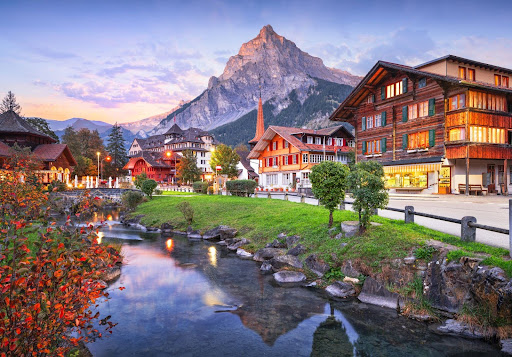
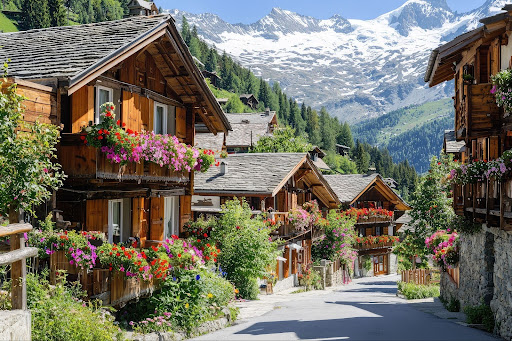
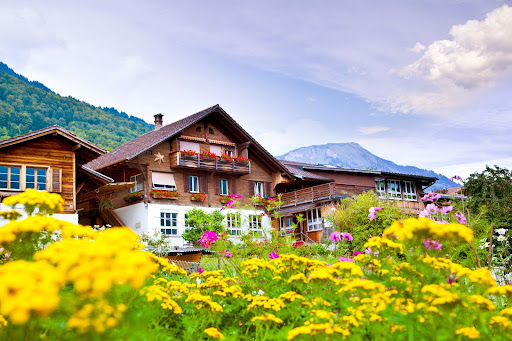
Located 1,300 metres above sea level in the canton of Valais, Albinen is exactly what you'd picture a Swiss village to look like: traditional wooden chalets overlooking majestic mountains and lush meadows. A decade ago, its residents were struggling. The population had dwindled to roughly 200, mostly elderly, and the school had been forced to close.
In 2017, the village voted in favour of a radical solution — pay people to move there. The scheme offered CHF 25,000 per adult and CHF 10,000 per child, with a family of four eligible for up to CHF 70,000 (roughly £62,000 at current rates).
And here's the up-to-date 2026 picture. The scheme is still running, but a few things have changed since the early viral headlines:
- It has actually worked. By 2024–25, the village council had approved around 38 new residents under the scheme, including 11 children — up from 17 applications and 47 residents back in 2023.
- Payment is now delayed. The cash incentive is no longer handed over at the point of moving — applicants now need to take root in Albinen for five years before receiving it, to filter out short-term takers.
- Foreign demand is overwhelming. Mayor Nicole Köppel has said the village receives around 100 enquiries a day, the vast majority from people who don't meet the criteria.
Albinen is also genuinely one of Valais' best-preserved villages. It sits on the sunny side of the Rhone valley, close to the world-famous thermal spa of Leukerbad, with challenging ski slopes and spectacular views on the doorstep.
Eligibility and Requirements
Before you start packing, the criteria are strict. Here is what an applicant needs to meet:
- Applicants must be under 45 years old
- Applicants must invest at least CHF 200,000 into buying or building a home in the village
- Applicants cannot buy more than one property in Albinen
- Applicants must hold a Swiss C residence permit. EU citizens with five continuous years of Swiss residency can apply; non-EU/EFTA nationals — including UK citizens — need ten years of continuous residency first
- Applicants who sell or leave the property within ten years must refund the full amount received
- The bonus is now only paid after five years of residence (a recent change to reduce administrative burden)
That C-permit rule is the catch most British media articles skip. You can't arrive from the UK on a Tuesday and apply for the Albinen bonus on the Wednesday. You need ten years of legitimate Swiss residency under your belt first. For most British movers, that means starting with a normal route — a job offer, a Swiss employer-sponsored B permit, and a long-term plan — and treating Albinen as a possible later chapter.
Other Swiss Villages That Pay You to Stay or Move
Albinen is the headline grabber, but it is far from alone. Across rural Switzerland, dozens of municipalities run their own variations to combat rural depopulation. A few worth knowing about in 2026:
Villages Offering Homes from £1
In 2019, the village of Monti Scìaga, on the Swiss-Italian border, made global headlines by offering nine stone cottages for just £1 each — provided the new owners agreed to invest their time and money into renovating them. The neighbouring village of Gambarogno ran a similar scheme until 2022. Both sit about 60 km from Lake Como and 100 km from Milan, which puts the offer into perspective.
Mont-Noble: Proof That These Schemes Actually Work
The municipality of Mont-Noble (which includes the former village of Vernamiège, the original 1993 pioneer of these schemes) lowered the price of developed building land to CHF 100–120 per square metre. The result speaks for itself: the population grew from 867 in 2011 to 1,064 by 2024 — a 23% rise in a country where most rural villages have been shrinking.
Bourg-Saint-Pierre, Inden and Trient
In Bourg-Saint-Pierre (also in Valais), new residents who build or renovate property get a 10% credit up to CHF 30,000 — but with a 20-year residency commitment. Inden gives residents a discount at the village shop. Trient goes furthest, offering free energy, free bus passes, and even subsidies on health insurance and renovations.
Small Towns That Pay Residents to Have Children
In the rural municipality of Grossdietwil, residents under 30 receive a CHF 1,500 bonus to stay. Many hamlets now go further with cash bonuses to those who give birth or adopt children. In Ticino and Geneva, the "baby bonus" can reach CHF 3,000, while Lucerne, Schwyz, Uri, Fribourg, Jura and Neuchâtel offer CHF 1,000–1,500.
For expat families with young children planning long-term residency, these incentives quietly add up — and they signal which cantons most need new arrivals.
Why Switzerland Actually Needs Expats
If Switzerland is such a great place to live, why are entire municipalities paying people to come?
As of mid-2024, there were just under 52,000 empty homes across the country. While that's down from nearly 79,000 vacant houses in 2020, certain cantons — especially Ticino and Jura — still need to fill homes and rebuild community life or risk fading away entirely.
The bigger driver is demographic. Experts predict Switzerland will need an additional 430,000 workers by 2040 due to a declining birth rate and an ageing population. Skilled UK professionals — especially in finance, engineering, IT, pharma, healthcare and hospitality — are exactly the kind of arrivals Swiss employers are actively trying to attract.
How to Move from the UK to Switzerland in 2026
Clearly, a lot of Swiss villages, towns and cantons are looking to grow. So how do you, as a UK resident, actually get there?
Understand the Post-Brexit UK–Switzerland Relationship
Neither Switzerland nor the UK are members of the EU. After Brexit, UK citizens lost the easy free-movement rights that EU nationals still enjoy in Switzerland. But the two countries have a comprehensive bilateral agreement, and there is one major recent development worth knowing about:
In October 2025, the UK and Switzerland extended their Services Mobility Agreement (SMA) until 31 December 2029. It allows UK-based professionals to deliver services in Switzerland for up to 90 days per calendar year without a Swiss work permit — covering consulting, IT, legal, accounting, engineering and many other skilled sectors. More than 6,000 short-term assignments used the SMA in 2024 alone.
For longer stays — including any permanent move — you still need a proper Swiss work and residence permit. Roughly 40,000 Britons already call Switzerland home, and that number continues to grow.
Understand the Visa and Permit Routes
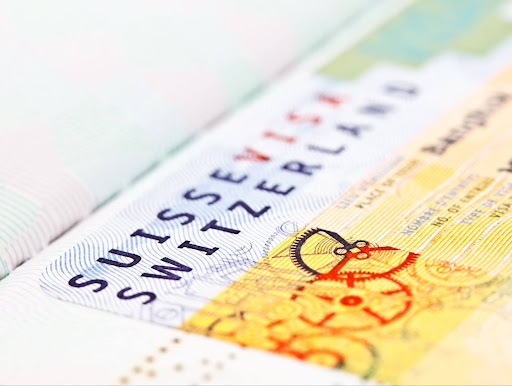
As a non-citizen, you'll need a residence permit for any stay longer than 90 days. UK citizens can typically apply for:
- L permit — short-term residence (typically up to one year), often tied to a specific job
- B permit — long-term residence, renewable annually, typically employer-sponsored
- C permit — settled status, available after 10 years of continuous residence for non-EU nationals (this is the one Albinen requires)
UK citizens can also retire in Switzerland, provided they show sufficient income, and they can continue to draw their UK state pension once there.
Be aware that if you're over 45 you won't qualify for many of the village financial incentive schemes — but you can still live and work in Switzerland under standard permit routes. Visa rules change regularly; always check the latest information from the State Secretariat for Migration (SEM) before committing.
Account for Tax and Healthcare Contributions
Switzerland has a famously favourable tax reputation, especially for the international super-rich. But the reality is more nuanced — taxes vary dramatically by canton, with rates ranging from roughly 0% to 30% across the 26 cantons. Zug, Schwyz, Obwalden and Nidwalden are consistently the lowest-tax cantons; Geneva, Vaud and Bern are among the higher.
All long-term residents must hold private health insurance from a Swiss provider — there is no NHS equivalent. Expect monthly premiums of around CHF 350–400 per adult in 2026, plus deductibles and co-payments. Even when an employer makes contributions, the policy itself is your individual responsibility.
Plan for Your Belongings — and Pick the Right Mover
This is where a specialist matters more than most people realise. Switzerland is not in the EU, which means moving your household goods is a customs operation, not a simple drive through. Many UK removal companies that handle France or Spain don't do Switzerland properly because it has its own paperwork, its own border procedures, and its own quirks.
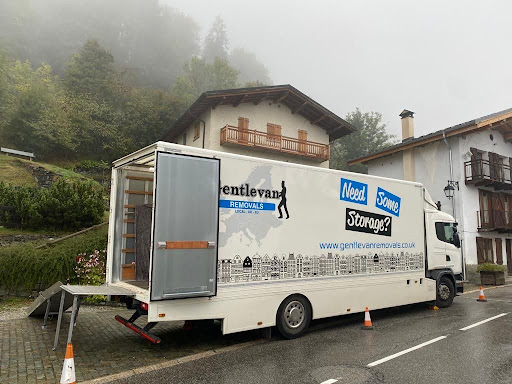
At Gentlevan Removals, we've been running European routes since 2011 and handle UK to Switzerland moves regularly. Our service includes:
- Professional packing services with export-grade materials
- A specialist fleet from a 3.5-tonne Luton van up to a 36-tonne road train — right-sized for the load
- Secure UK storage if your Swiss property isn't ready for the goods on day one — including two months free storage on international moves
- Full Swiss customs documentation handled on your behalf (more on the paperwork below)
- Both dedicated load (your goods only, in their own vehicle) and shared / part-load options (you pay for the space you use, sharing a lorry with other UK–Switzerland clients)
👉 If you're actively planning your move: see our dedicated UK to Switzerland removals page for routes, transit times, fleet, and a quote form.
Compile the Right Customs Documentation
No international move is free of paperwork, and Switzerland has its own set of forms that look nothing like the EU process. UK citizens moving their belongings need to qualify for Transfer of Domicile (ToD) status — failing which they may face VAT and import duty on the value of their goods.
The headline rules for duty-free import of household goods in 2026 are:
- You must have used and owned the items for at least 6 months before shipping (so don't buy a new sofa the week before you move)
- You must import your goods within 24 months of changing residence to Switzerland — and any second or additional shipment must be announced on the main import declaration
- You'll need to complete Swiss Customs Form 18.44 (the duty-free import declaration), submitted in duplicate, original signature mandatory — photocopies and PDFs are not accepted
- You'll need supporting evidence: passport copy, detailed inventory, proof of UK residence (utility bills, council tax), your Swiss residence permit or approval letter, and your Swiss lease or property deed
This is exactly the kind of paperwork that causes delays at the border if it's not right. Gentlevan handles the customs side end-to-end so you arrive at your new Swiss address with your possessions cleared, not stuck in a holding bay near Basel.
Moving Back to the UK from Switzerland?
This guide is mostly aimed at people heading to Switzerland — but a meaningful share of our Swiss work is in the opposite direction. UK nationals returning home after a career posting, retirees coming back to be closer to family, and Swiss nationals relocating to the UK for work all use our service.
The customs process runs in reverse — UK Transfer of Residence (ToR) paperwork rather than Swiss Form 18.44 — but the principle is the same: get the documentation right before the lorry leaves, and the move runs smoothly. We handle the full round trip, including UK storage if your British property isn't ready when your goods arrive.
Switzerland → UK shared loads are part of our regular Swiss route, which keeps costs sensible for smaller consignments such as a one-bedroom flat's worth of furniture or a few rooms' contents.
Pros and Cons of Living in Switzerland
Before committing to the big move, here are some of the most prominent pros and cons of living in Switzerland in 2026.
Pros
- Apartments tend to be modern, spacious, and well-connected to public transport
- Swiss residents score consistently above the OECD average on income, health, social connections and work-life balance
- The education system is exemplary, with strong bilingual and international schools for expat families
- Unemployment rates are very low
- One of the world's top countries for hiking, alpine sports, and outdoor living
- Diverse and growing international community — particularly in Zurich, Geneva, Basel and Zug
- English is widely spoken across the country, especially in business and urban settings
- Very safe — over 70% of Swiss residents say they feel comfortable walking home alone at night, compared to roughly half in the UK
- Some cantons and municipalities still pay newcomers (under the right conditions)
Cons
- Switzerland is one of the most expensive countries in the world — though above-average salaries usually offset it. Expect a monthly transit pass to cost CHF 70–100, and health insurance CHF 350–400 per adult
- The Swiss can be reserved and private — making friends often takes time
- Train tickets are among the most expensive in Europe, even though the rail network itself is excellent
- Housing in Zurich and Geneva is genuinely scarce — rentals can require references, proof of income, and patience
- Bureaucracy at the cantonal level varies, and not all paperwork is available in English
Frequently Asked Questions
Is the Albinen scheme still running in 2026?
Yes. As of 2024–25, around 38 new residents (including 11 children) have been approved under the scheme. The headline payment of CHF 25,000 per adult plus CHF 10,000 per child is unchanged, but the bonus is now delayed until five years of continuous residence in the village.
Can a UK citizen apply for the Albinen bonus straight from the UK?
No. You need a Swiss C residence permit first, which for UK nationals requires ten years of continuous legal residency in Switzerland. The Albinen scheme is realistically a long-term plan, not a quick-win.
How much does it cost to move from the UK to Switzerland?
It depends on volume, route, and whether you choose a dedicated or shared load. Industry-typical figures for a full household move from the UK to Switzerland sit in the £3,000–£7,000 range; smaller part-loads can come in considerably lower. For an accurate, tailored quote, use our online quote form or call our office.
Do I need Transfer of Domicile status to import my belongings?
Yes, if you want duty-free import. Without it, Swiss customs will assess VAT and possibly import duty on the value of your goods. Gentlevan Removals prepares the Form 18.44 documentation on your behalf as part of every UK to Switzerland move.
How long does a UK to Switzerland removal take?
Door-to-door transit is typically 7–14 days for a shared load, depending on the route and your collection/delivery dates. Dedicated loads can be considerably faster as they don't share routing with other consignments.
Can you handle return moves from Switzerland to the UK?
Yes. Switzerland → UK is part of our regular European route, and we handle the UK Transfer of Residence (ToR) paperwork as well as the Swiss export side.
Which Swiss cities do you regularly serve?
Zurich, Geneva, Basel, Lausanne, Bern, Winterthur, Lucerne, Saint Gallen, Lugano and Biel/Bienne. For smaller towns and alpine villages we plan the routing on a case-by-case basis — many of our jobs end at addresses well off the main motorway network.
Make Your Move with a Trusted UK to Switzerland Removals Company
The pros of life in Switzerland clearly outweigh the cons for most people who make the move. And while the village payment schemes are real, they are best understood as a long-term reward for putting down genuine roots — not as a shortcut to free money. The realistic route for most UK movers is the standard one: a job, a B permit, a place to live, and a clean, well-documented relocation.
That last part is where we come in. Over the past 14 years, Gentlevan Removals has helped hundreds of British families, professionals and retirees move to and from mainland Europe. Switzerland is one of our regular routes, and we know what it takes to get a UK household across the border with the paperwork in order and the belongings intact.
Our services to and from Switzerland cover, among others:
- Zurich
- Geneva
- Basel
- Lausanne
- Bern
- Winterthur
- Lucerne
- Saint Gallen
- Lugano
- Biel/Bienne
Our fleet ranges from a 3.5-tonne Luton van to a 36-tonne road train, so we can handle anything from a single-room consignment to a full four-bedroom house. Shared loads keep costs sensible for smaller moves; dedicated loads keep schedules tight for full house relocations.
Most importantly, our extensive experience with Swiss customs and Transfer of Domicile paperwork means fewer delays, fewer surprises, and a smoother arrival at your new Swiss address.
Useful Related Reading
Ready to plan your Swiss move? Request a free online quote or contact our team directly — we'll talk you through routes, timing, and customs in plain English.